
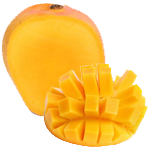
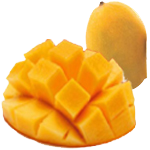
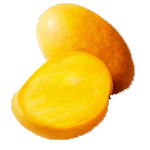

Alphonso- The King
Article by Jaidev Sharma, February 13, 2026
There are mangoes and there is Alphonso– the King of Mangoes. Who made it the King? Is it really the best mango? Never heard of it? What is the whole deal?
It is the King’s followers who make a King. And so is the case here. This mango is native to Maharashtra, India, in particular the Konkan West coast of India. People of this region are whole heartedly, devotedly dedicated to the King. To them mango-is-alphonso and alphonso-is-mango. When the reign of Alphonso ends, then they reluctantly choose an alternative, such as a cousin of Alphonso- the Mancurad or Payri or the Queen of mangoes, Kesar.
This poses a question (silly question for an Alphonso fan) to t;he rest of the mango loving humanity- Is this a legitimate king? One thing is certain- Alphonso is certainly the most popular mango in terms of sales- it outsells all other varieties 3:1. This is in spite of the fact that Alphonso is one of the most sensitive variety, highly prone to spoilage and also among the costliest. This certainly legitimizes the king !!
Another trait of a legitimate King is that others want to emulate it and get a piece of the legitimacy !! Alphonso is grown not only in the Konkan region, but in other regions of India as well- we have the Dharwad Alphonso, the Valsad Alphonso, the Andhra Alphonso, the Kerala Alphonso etc.. In the past 100 years, Alphonso has spread to many other countries, such as Malawi, Egypt, Dominican Republic, Mexico, Brazil and Colombia, where farmers grow the fruit with all their passion. Enthusiasts are also trying to grow it in California and Florida !! Everyone wants to grow the Alphonso, but it is difficult to grow. Getting it to taste as good is even more difficult !!
Let us delve into some history- How old is the Alphonso variety? It is certainly more than 500 years old getting this name from the Portuguese General based in Goa Aphonso de Albuquerque. Garcia de Orta (Portuguese botanist) based in Mumbai (erstwhile Bombay) mentions this mango as famous and better than the mango grown in Goa, so this mango was already known at that time, possibly by another name. In the local region, the mango is called Hapuz or Hapoos and could have existed for thousands of years- mango does find a mention in many of the Indian scriptures !! There are many instances where folks have told me that the alphonso is called by another name in their region in India and abroad, but on closer inspection the mango turned out to be a different variety. As a rule of thumb, if the mango is not called Alphonso or Hapuz, it is not the real thing (AI is particularly stupid in spotting the naming truth). Among the many versions of the King Alphonso, the Alphonso which come from the Ratnagiri and Devgad regions is the best- the King among Kings !! Alphonso is good in itself, but these mangoes are considered the real deal and everything else at best a compromise…
What is so great about the Alphonso? The taste profile of Alphonso is complex and it covers a wide range of flavors. If I had to put it in words, without you having ever tasted it, Alphonso is more than how good you can imagine a fruit on earth to taste !! Alphonso is nature’s gift to humanity- it demonstrates how to achieve salvation by the simple act of consuming a fruit. Alphonso is also nature’s way to shatter human ego. No matter what your stature is, when you cut an Alphonso and it turns out to be either spoilt or spongy inside, you instantly realize that nature truly treats everyone equally !! Every once in a while we are assumed to possess superpowers to be able to manipulate the fruit. But if a fruit is not built to realize its full potential, it will fall short in some way and no one can prevent it. We certainly try to filter out such fruit and prevent it from reaching you !!
Is Alphonso the sweetest of them all- no it isn’t. This is not the sweetest mango that we import- the sweetest is Chausa. Is it the biggest of them all- no it isn’t. Infact, a medium sized alphonso is more flavorful and has less imperfections. Is it the most expensive- no it isn’t, that distinction is enjoyed by its cousin, the Mancurad mango from Goa. Is it the most reliable- no it isn’t. Infact, it is one of the most unreliable of the varieties and hides many flaws inside the fruit- by one study, 30 percent of the Alphonso suffers from sponginess of the seed. This condition develops when the seed absorbs nutrients from the surrounding tissue in a bid to germinate- something like the seed eating the mango before we do. Unfortunately, we get to know only when we cut it. Still, Alphonso is the most sought after mango.
When a human tastes a good mango and wakes up to the possibility that an entire life has been lived in ignorance of the good mango, the quest to find the best mango begins. For some humans, the realization is different- they have had a good mango, but they realize that other varieties exist that are equally good or better. This is when the fame of the Alphonso mango catches on. But the mango is nowhere to be found !! Why? Because its growing season and growing regions are limited- moreover only experts can grow it properly. The King also needs royal treatment and can throw a tantrum at any time- this level of sensitivity can become difficult to handle.
During the Alphonso season, the whole planet is trying to get the Alphonso from Ratnagiri and Devgad, including the locals. The best of the Alphonsos vanishes in no time. We use all our contacts and our ability trying to get this fruit to you- if we blink, we can miss the boat !! That is where we try hard to get folks to order early so that we get a chance to secure the best fruit for you. Your order starts a long journey for the mango- a journey of thousands of miles where it survives a plane load of logistics and flies past logistics, economic and political hurdles. Finally we prepare your mango and ship it to your table- from the Tree to your Table within 7 days !!
Kesar- The Queen of Mangoes
Article written by Jaidev Sharma, February 14, 2026
In the kingdom of mangoes, Kesar mango is the Queen. Sweet and reliable, this is one of the sweetest mangoes that we import. It is fiberless and it does not throw tantrums like the King, Alphonso. If it has to spoil, it show its intention on the surface. This mango mostly grown in the Gujarat region of India, which is home to some of the sweetest people in India. Not only are the people sweet, they also have a sweet tooth- they add sugar to almost everything they eat. No wonder, they have ensured that their landmark mango is also sweet!! Gujaratis believe in delivering value for money- kesar mango which has a very good reliability record.
Which is the best Kesar? If it is so reliable, then is every Kesar the same. Not really !! Generally Kesar will not disappoint, but there is a difference between good and WOW GOOD !! Let us visit some history of the Kesar mango- this mango was first cultivated in 1931 by the Nawab of Junagarh, Gujarat. The Nawab of Junagarh liked it and patronized it and it has been famous ever since. Kesar mango has a GI (Geographical Indicator) Tag recognizing it’s origin in the Gir region of Gujarat. So this Kesar is special- this mango is sweet, smells great and has an orangish flesh when ripe. It also has a thicker skin and average size. The Junagarh/Gir Kesar is true delight to taste !!
However, the best Kesar that I have tasted came from Maharashtra around Jalna. And the best looking Kesar I have seen came from Devgad in Maharashtra !! This Kesar has a bit thinner skin, yellowish flesh when ripe and intense sweet mango flavor. It’s fragrance is vanilla like. This mango is now grown at a lot of places in India, but mostly in the South and the West. It is grown in many countries as well, including Mexico and Dominican Republic, but these versions are less sweet. There is a Jumbo version of the Kesar mango, which is generally a cross between Kesar and the Vanraj variety. However, that can be less flavorful, although it is equally sweet. People seem to like to gift the Jumbo version when it is available- in India, this version is generally grown in the Bhuj region of Gujarat which gets ready at the end of June when rains set in the rest of the Kesar belt.
Mango generally does well in dry but not excessively hot climate. Rains tend to cause imperfections and fungal issues in the fruit. If we draw a 300 mile radius circle with its center in Junagarh, that for us is the Kesar zone. Any kesar growing outside this belt has not been able to move our customers so far !!
Banganpalli: The Pride of Andhra
Article written by Jaidev Sharma, February 15, 2026
Banganpalli is a village in the state of Andhra Pradesh, India. It is said the Banganpalli was first grown in this village. In the state of Andhra Pradesh, it is also known as Benishaan (the Clean one!!). This mango is also grown in other states of India, although these seem more like versions of the fruit- Safeda in the North, Badami in Karnataka or Chapatai for it rather flat shape. It is important to take these names with a pinch of salt, because some regions could be using the name just to cash in on the reputation of the fruit.
For me, Safeda was the version that I had tasted, but there didn’t seem to be anything special about it. In 2008, pushed by a few friends from Andhra, I tried it again, only to be thoroughly disappointed with it- I wondered how someone could swear by a fruit which I could barely consume. This opinion however changed when we got a shipment of Banganpalli from the Kadapa region of Andhra. And what a discovery it was !! I remember eating six large sized Banganpalli right on the spot and after that I felt a feeling on salvation !! Yellowish, with black dots, sweet like nothing I had ever tasted, fresh like the autumn mist, fiberless and succulent this was fruit to die for !! Since that day, Banganpalli from Kadapa is what we anchor our season on.
For us, Banganpalli has to come within a 200 mile radius of Kadapa, otherwise is does not work. Probably, the hilly dry mountains of Kadapa gave it the sweetness which made it stand out. We have been able to get good Banganpalli in pockets around this area. Global warming has changed the fruit maturity schedule over the past 4 years with loss of consistency in orchards. In 2025, we made a mobile team for Bangapalli and we are strengthening the team in 2026. Incidently, during the COVID times, we found very good tasting Banganpalli in the Sindh region of Pakistan. However, the folks there did not know about it- apparently, a few mango growers who migrated to Sindh from Hyderabad took their fruit with them. They then grafted Himayat and Banganpalli on the same trees. Over time, people forgot the original and all the fruit grown on the trees was called Banganpalli. This is not that popular in Pakistan and the fruit is used more for mango pickle. The orchards are also not well maintained.
While it is interesting to compare fruit from different regions, so much goodness is a variety is possible only by divine blessing. For the Kadapa region, the blessings flow from Lord Balaji through the Tirumla Hills !! Such divine taste is truly something to be proud of- no wonder Bangapalli is called the “Pride of Andhra” !!
Chausa: The Emperor of Mangoes
Article written by Jaidev Sharma, February 15, 2026
For the title of King and Queen of mangoes, there are many debates. But for one title, there is scarcely any debate- the Emperor of Mangoes. This title goes to the might Chausa mango. Chausa (the succulent one) is the sweetest mango that we import. Chausa is also called Chaunsa in Pakistan and is a North Indian mango variety. It is said to have been named by Sher Shah Suri after a victory in Chausa, Bihar in the sixteenth century. It is difficult to know when it was developed- lord Buddha is known to have meditated under a mango tree in about the same region. We do not know if it was a Chausa tree that could have been blessed in the process !!
Chausa has a few versions- the most flavorful is the early season Chausa, Samar Bahisht (Mango of Paradise). This version is fiberless, sweet, fiberless and yellow with a thin skin. There is a late season version of Chausa which is called the white chausa, which has a whitish flesh and turns fully yellow when ripe- this has a citrusy tone, although in terms of sweetness it is again very high.
Chausa grows in North India and in Pakistan. In Pakistan, the Chausa grows in Sindh, Rahim-Yar-Khan and in Multan. Out of these Chausa, the mango that comes from Multan is Legendary. Multan is a uniquely blessed town, where even the soil is magical !! The Multani Mitti (Soil) is sold worldwide and is known for its healing properties !! While its soil heals, its mango satiates the human experience !! One who has experienced the delicacy, flavor and sweetness of the Chausa from Multan can only wonder in awe at the prowess of those who nurture and grow such heavenly entities!!
The Chausa is a complex flavor, which is prone to spoilage with a low shelf life. But a mango season without the Chausa mango is like a life without spirit. The Chausa is consumed both as a cut variety when it is still hard but ripe and as a juice variety once it has ripened.
